My Hot take for 2026
There’s a short video going live this week where I share my Hot Take for 2026.
It’s punchy. It’s honest. And it’s been sitting with me for a long time.
But a reel can only hold so much.
So this post is the space behind the video, the why, the nuance, the parts that don’t fit into 30 seconds, and the reflections I didn’t want to rush.
If you’ve ever felt like education almost gets it right, but still somehow misses the mark, this one’s for you!
The Hot Take (in full)
Here it is, plainly:
We are still asking children and young people to adapt to systems that were never designed for them, and then calling it “support” when they struggle!
And yes, that includes:
Learners with additional support needs
Neurodivergent learners
Anxious learners
Learners who don’t sit neatly, think quickly, write fluently, or perform on demand
But honestly? It affects everyone.
Hot Takes Video
What I See Every Day
This isn’t a theory for me.
It’s lived, observed, and repeated, week after week.
I meet learners who:
are bright, curious, and deeply capable,
have rich ideas but can’t access them under pressure,
have been told (directly or indirectly) that they are “behind”.
And what breaks my heart isn’t their learning differences.
It’s the quiet belief they carry that something is wrong with them.
Somewhere along the way, they learned:
that struggling means failing,
that support means being “less than”,
that confidence must come after achievement.
But what if we’ve got that backwards?
Confidence Before Curriculum (Yes, I’m Saying It Again)
Here’s the part I’ll never soften:
No child learns well when they don’t feel safe, seen, or believed in.
Before the worksheets. Before the targets. Before the interventions.
Learning requires trust, in the adult, in the environment, and eventually, in themselves!
And yet so many systems still prioritise:
speed over understanding,
compliance over curiosity,
output over wellbeing.
When learners push back, shut down, or disengage, we label the behaviour, instead of questioning the environment.
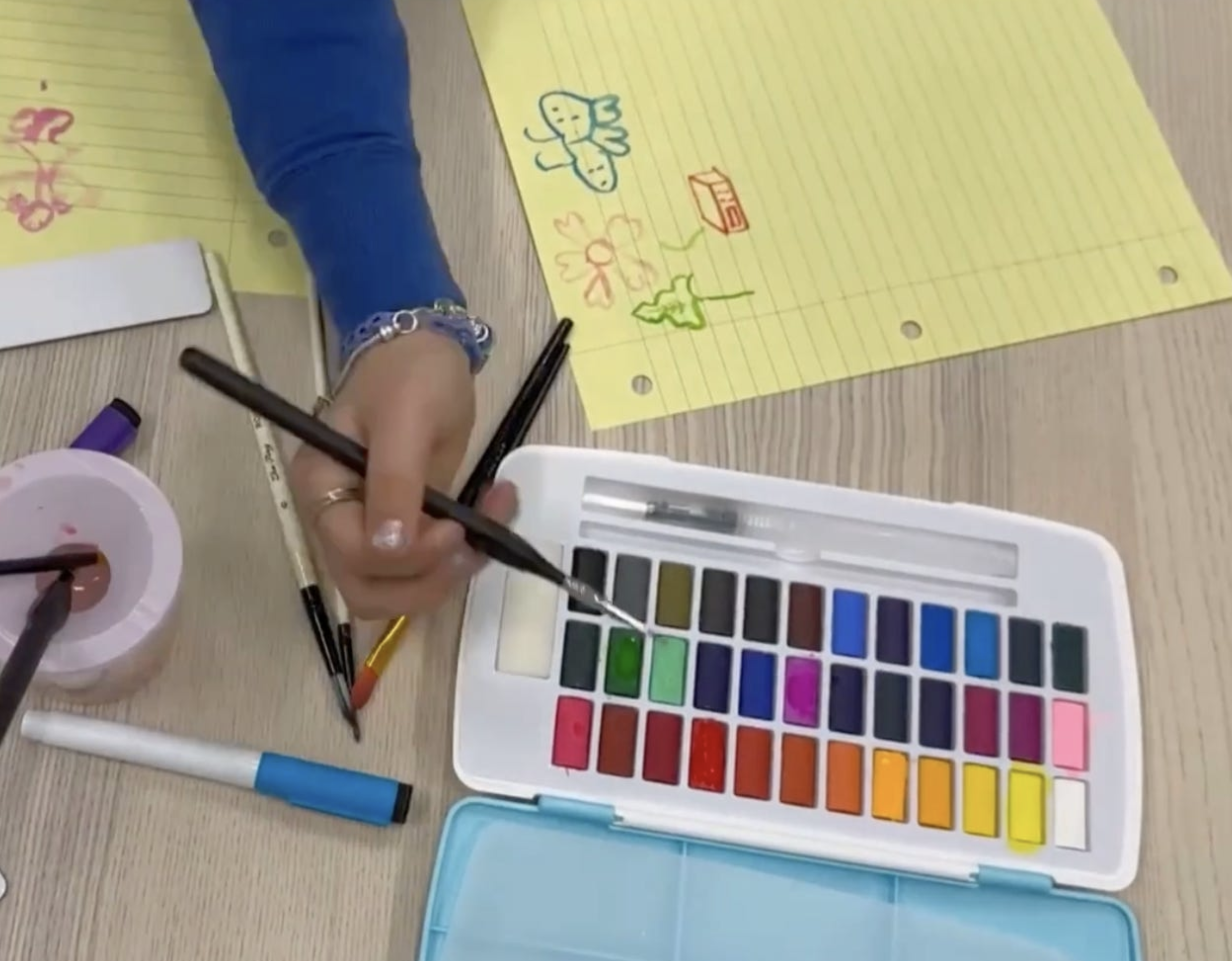
📸 Below is a picture from a session last week. Believe it or not, this ‘looks’ like painting… but it is actually, listening and talking, curiosity, questioning and critical thinking, fine motor skills and using the tripod grip. What the child see’s: “Yay, I love painting”, but the learning that is happening during the ‘painting’ is so much more!
Support Shouldn’t Feel Like Pressure in Disguise
This is where my hot take gets uncomfortable.
Too often, “support” looks like:
more work,
more monitoring,
more reminders of what a learner can’t do yet.
Even well-intentioned strategies can become another form of pressure when they’re layered onto an already overwhelmed child.
Support should feel like:
relief,
permission,
choice,
It should say:
“I see how your brain works, let’s work with it, not against it.”
Small Shifts Make Real Change
This isn’t about tearing everything down.
It’s about small, human shifts that say:
learning doesn’t have to look one way,
progress isn’t always linear,
different doesn’t mean difficult… it means designed differently!
Some of the most powerful changes I see are deceptively simple:
slowing the pace,
offering alternatives,
letting learners explain their thinking in their own way,
celebrating effort without attaching pressure.
These aren’t “soft” approaches.
They’re effective ones.
To the Adults Reading This
If you’re a parent, carer or supporter; I want you to hear this clearly:
You are not imagining it,
The system is demanding,
And advocating for a child does not mean you are asking for too much.
You’re asking for what should already exist.
And if you’re a learner reading this (or a former one who still carries those school-day feelings): Your way of thinking was never the problem.
Let’s Talk About It
This post isn’t a conclusion, it’s an invitation.
I’d genuinely love to know:
What part of the system feels hardest right now?
What would learning look like if confidence came first?
What do you wish adults had understood sooner?
👇 Comments are open below… this is a thinking space, not a debate stage.
To the Educators, Teachers and Support Staff
This part is for you…
This post is not a criticism of teachers.
It’s not a finger-point.
And it’s definitely not a suggestion that you’re “not doing enough”.
You are working inside classrooms that are complex, demanding, and full to the brim, with learners across the entire spectrum of need, ability, emotion, and experience. You’re balancing curriculum expectations, wellbeing, behaviour, assessment, paperwork, communication, and care… often all at once.
It is not your fault that one adult cannot fully personalise learning for every individual child, every minute of the day. That expectation was never realistic… and yet it’s quietly placed on you anyway.
Many educators want exactly what this post talks about:
more time to connect,
more flexibility to adapt,
more space for confidence to come before curriculum.
But wanting it doesn’t magically make the system lighter.
So if this post resonated with you, please hear this clearly:
You’re not failing. You’re navigating something incredibly hard with the tools and time you’ve been given!
Kindling Minds exists alongside classrooms, not in judgement of them. My role is to support learners outside the school day, and in doing so, to ease pressure, bridge gaps, and help children return to class with more confidence, language, and self-belief.
You don’t have to carry it all alone!
And you were never meant to!
If you’re an educator reading this and thinking, “Yes, this is what I wish I could do more of”, then this space includes you too.
We’re on the same side 🤍